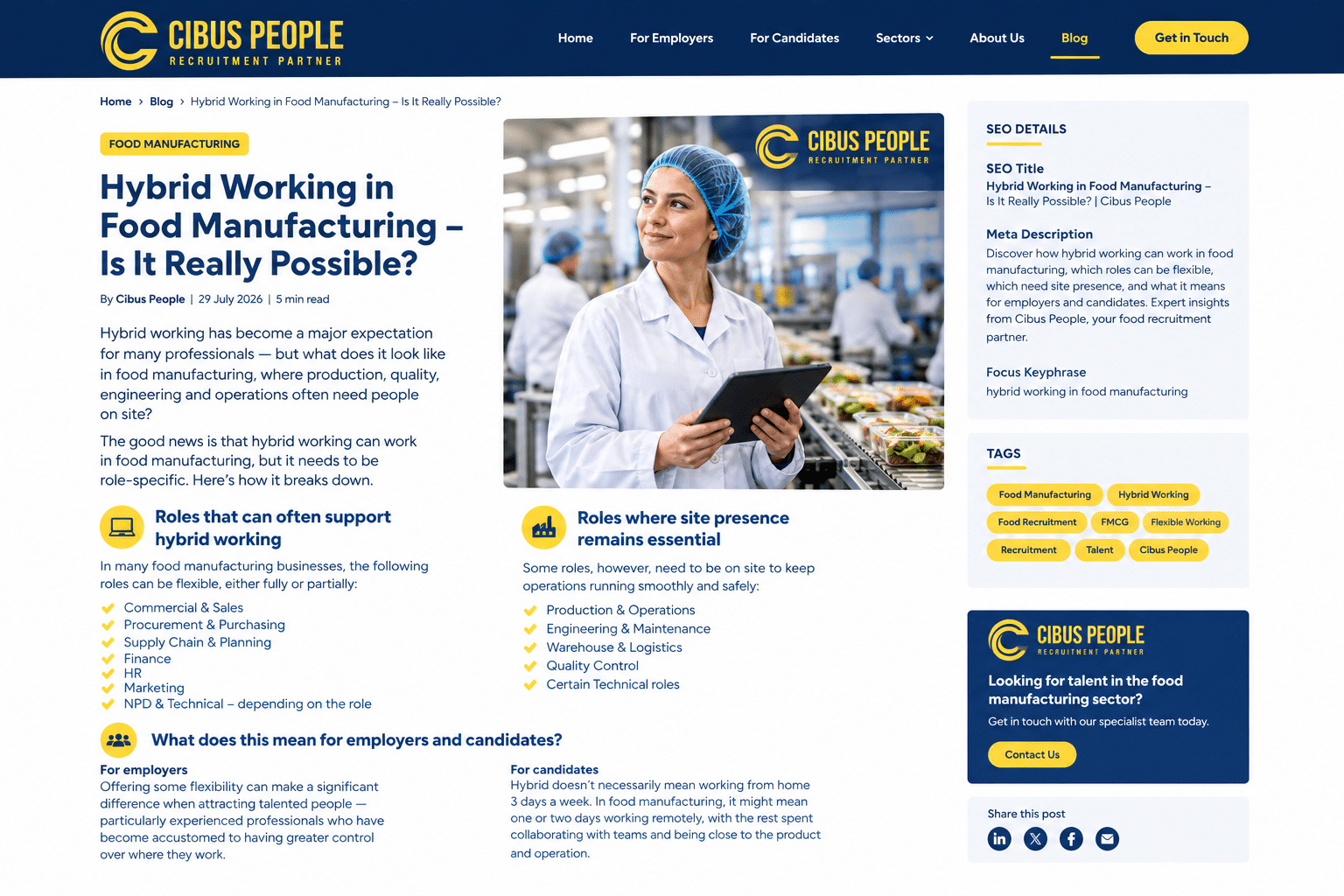
Hybrid working has become an important part of the employment conversation across the UK. But in food manufacturing, where production, quality, engineering and operations often depend on people being physically present, how realistic is hybrid working?
The answer is: yes, hybrid working can work in food manufacturing — but it needs to be role-specific.
Which food manufacturing roles can support hybrid working?
Not every role needs to be permanently site-based. Many professional functions can offer some degree of flexibility, including:
- Commercial & Sales
- Procurement & Purchasing
- Supply Chain & Planning
- Finance
- HR
- Marketing
- NPD & Technical, depending on the role and stage of development
For these positions, businesses may be able to offer one or more days working remotely while maintaining regular contact with colleagues and the manufacturing site.
Which roles still need people on site?
There are also roles where physical presence remains critical to the smooth and safe running of a food manufacturing operation.
These can include:
- Production & Operations
- Engineering & Maintenance
- Warehouse & Logistics
- Quality Control
- Certain Technical and Food Safety roles
For these positions, being close to the production environment, equipment, products and teams is often essential.
Why does hybrid working matter for food manufacturers?
The competition for experienced food manufacturing talent remains strong.
Offering some flexibility can help businesses broaden their candidate pool and make vacancies more attractive — particularly when competing for experienced professionals who have become accustomed to greater flexibility in their working lives.
However, hybrid working shouldn’t simply be offered because candidates expect it.
It needs to work for the business, the team and the individual.
What does hybrid working actually mean?
One of the biggest misconceptions is that hybrid working automatically means working from home three days a week.
In food manufacturing, it could look very different.
For example, a Supply Chain Manager might spend:
2 days working remotely + 3 days on site
while a Commercial Manager could potentially have greater flexibility depending on customer and business requirements.
The important thing is finding the right balance.
What does this mean for candidates?
Candidates should also recognise that hybrid doesn’t mean fully remote.
A role advertised as hybrid may still require regular site visits, face-to-face meetings, factory interaction and collaboration with operational teams.
For many food manufacturing professionals, this can actually provide the best of both worlds — flexibility when carrying out focused work, combined with the opportunity to remain connected to the people and products that drive the business.
The key question for employers
Rather than asking:
“Can this role be hybrid?”
perhaps the better question is:
“What level of flexibility allows this person to perform at their best while still supporting the needs of the business?”
Getting this balance right could help food manufacturers attract and retain the talent they need for future growth.
At Cibus People, we understand food talent
At Cibus People, we specialise in connecting talented professionals with businesses across the food, FMCG and hospitality sectors.
Whether you’re looking to recruit a new member of your team or considering your next career move, understanding what candidates and businesses really need is at the heart of successful recruitment.
What do you think?
Should more food manufacturing businesses embrace hybrid working to attract the best talent?